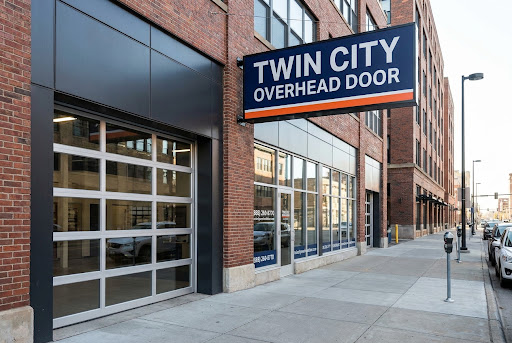
Garage Doors in the West Metro: Stock, Winters & Dispatch
Twin City Overhead Door services all 38 cities of the West Metro (9 in the 30-60 minute core dispatch band and (38, 9) in the 60-90 minute outer band) with the same process everywhere: a live dispatcher 24/7, same-day service as the norm, and a written fixed-price quote before any work. This page covers what is true of the whole region: its garage stock by era, the door types we see, winter logistics and honest pricing. Call (888) 260-8770.
The west metro runs newer, bigger and heavier than the rest of the map, and heavy is the operative word, because everything about garage door work out here scales with door weight. This page lays out the region's stock, its door types, its winters and its dispatch bands.
How the West Metro built its garages
The commuter belt from Plymouth and Maple Grove down through Minnetonka, Chanhassen and Chaska built out mostly between the 1980s and the 2000s: attached two- and three-stall garages with 16-foot insulated doubles as the default. Around Lake Minnetonka the stock turns custom, carriage-style and architect-spec doors on lake lots, where matching an existing profile matters as much as the mechanics. And the far-west towns: Delano, Watertown, Waconia, Cologne and their neighbors, mix older main-street blocks with new subdivisions, so the same route can carry a century-old detached garage and a three-stall built last year.
Heavy snow loads and freeze-thaw cycles are the region's weather signature, icing tracks and thresholds on lake-area homes and loading wide door faces with wind across the open western edges.
The doors we see most in the West Metro
A 16-foot insulated double can weigh well over 200 pounds, and that number drives everything: springs must be spec'd to the door's measured weight, wire gauge and cycle rating, never a one-size guess, openers need the torque to match, and an unbalanced spring quietly strains the motor all winter. The trucks stock 16-foot insulated doors for newer construction, custom and carriage-style hardware for the lake homes, and insulated steel doubles for everything in between. Wind-load reinforcement earns its place on wide doors facing open terrain.
Winter & dispatch logistics in this band
Dispatch honesty first: most of this region is the outer band. Nine of its 38 cities, the inner arc through Plymouth, Minnetonka, Maple Grove and the near-lake towns, ride the 30-60 minute core band, while the balance, from the western lake communities out to St. Michael, Delano, Waconia and Watertown, plans on 60-90 minutes on a normal day. Full coverage runs to 80 miles, so the far-west towns are inside the map, not at its edge.
Winter failure patterns follow the weight. When cold snaps arrive, and spring-failure calls cluster in the first deep freezes here as everywhere in Minnesota, a failed spring on a heavy insulated double leaves a door nothing short of dangerous to move by hand, so trapped-car calls are a bigger share of west-metro winter work. Iced tracks and frozen thresholds on lake-area homes round out the season's board.
What garage door repair costs in the West Metro
Pricing framing for the west metro: weight pushes quotes toward the upper half of the published bands. Spring work here is overwhelmingly the matched pair ($300-$550), heavy doors take opener replacements ($280-$520) harder than repairs ($95-$195), and new-door quotes on wide, insulated or custom-profile doors trend toward the top of the $1,200-$4,500 installed range. The bands themselves do not change, a written fixed-price quote before any work, in Waconia as in Plymouth. All figures are 2026 estimates.
| Garage door service | Typical Twin Cities cost (2026) |
|---|---|
| Single torsion spring replacement | $220-$380 |
| Matched pair of torsion springs | $300-$550 |
| Cable repair / replacement | $120-$210 |
| Opener repair | $95-$195 |
| Opener replacement | $280-$520 |
| Track realignment | $85-$160 |
| Panel replacement | $190-$420 |
| Tune-up | $79-$120 |
| After-hours surcharge | +$90-$160 |
| New garage door, installed | $1,200-$4,500 |
Ranges are 2026 Twin Cities estimates. Your final price is a written, fixed-price quote you sign before any work begins.
Every West Metro city we serve
Each of the 38 cities in this region has its own page, the local housing stock, the dispatch band, the full pricing table and the neighborhoods we work in. Pick yours:
One region of a metro-wide map
The West Metro is one of six regions on our Twin Cities service-area map, which runs up to 80 miles from our shop at 215 N Washington Ave in downtown Minneapolis. Wherever the truck rolls, the visit is identical: a live dispatcher takes the symptoms, you get a phone-quote range from the published table above, a text with the tech’s name and window, and a written fixed-price quote to sign before any work, licensed & insured technicians working to Minnesota residential code and manufacturer wind-load and spring specs.
Deep detail on each service lives on the metro hubs, which cover the West Metro along with the rest of the map:
Frequently Asked Questions
Why does my 16-foot door cost more to fix than my neighbor's single?
Weight. A 16-foot insulated double can weigh well over 200 pounds, which means heavier-gauge matched spring pairs ($300-$550, 2026 estimate), more careful balancing, and openers with the torque to match. The published bands cover it, wide doors simply land in the upper half of them. Your exact number is a written fixed-price quote before any work.
Do you handle custom and carriage-style doors around Lake Minnetonka?
Yes, custom and carriage-style doors on lake-area homes are one of the three door types our west-metro trucks are stocked for, alongside 16-foot insulated doors on newer construction and standard insulated steel doubles. Where a damaged panel's profile is still manufactured, panel replacement ($190-$420, 2026 estimate) beats replacing a matched door.
How long until a truck reaches the far-west towns?
Honestly: 60-90 minutes on a normal day for the outer band, Delano, Waconia, Watertown, St. Michael and their neighbors, versus 30-60 minutes for the inner arc through Plymouth, Maple Grove and Minnetonka. Same trucks, same pricing table, same written quote; only the drive time changes. Call (888) 260-8770 for a realistic ETA to your address.
24/7 Emergency Repair in the West Metro
Stuck door? Broken spring? We dispatch rapidly across the West Metro.
Get a Written Garage Door Quote in the West Metro
Live dispatcher, text ETA, written fixed-price quote before any work, same-day across the Twin Cities metro.